Maxim Pletner — Your Workflow Optimization with AI Tools

Engineers shouldn't have to learn AI.
AI should learn engineering.

Consulting practice focused on R&D labs, validation teams, and industrial groups. Apply AI agents and self-hosted AI to equipment programming, knowledge capture, and validation pipelines that previously demanded months of specialist time.

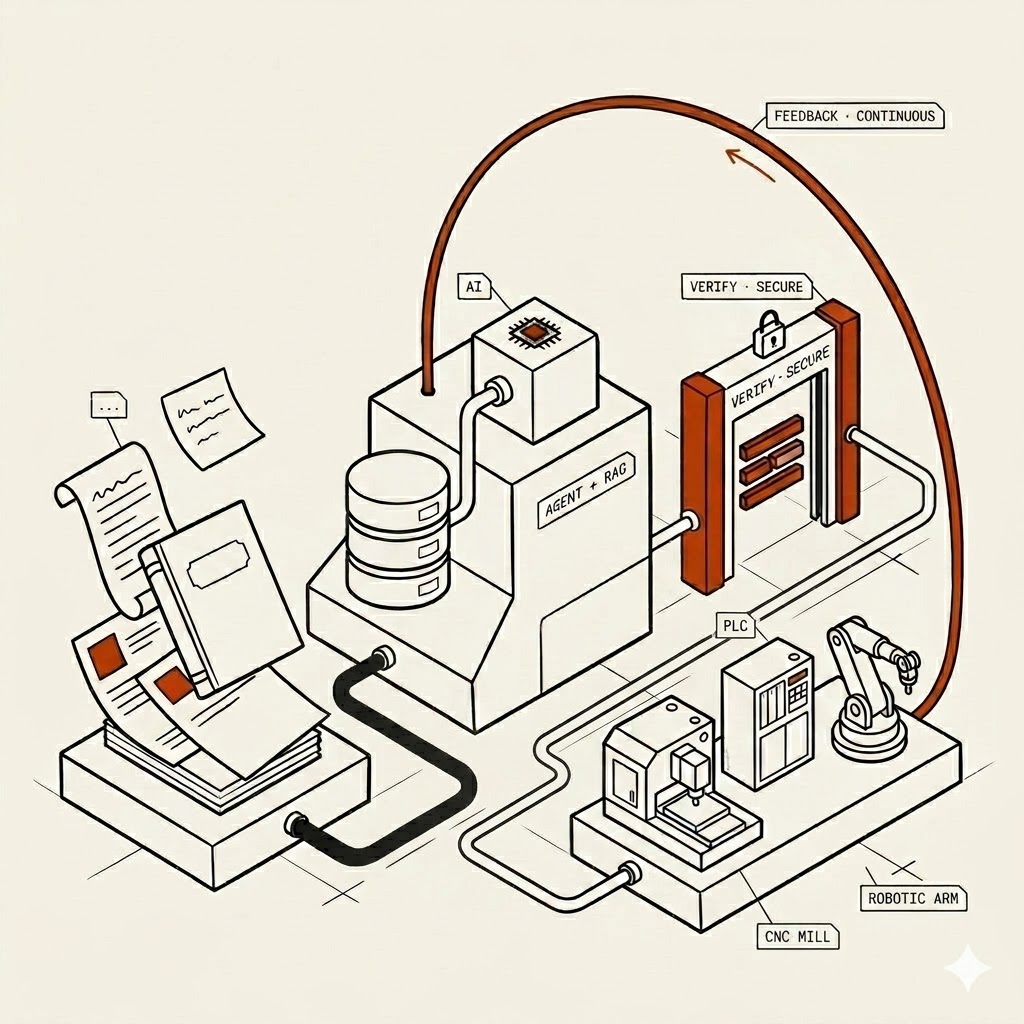
FIG. 01
Isometric schematic of an AI agent system: documents feed a database-backed agent, code passes through a secure verification gate, then deploys to CNC, PLC, and robotic equipment with a continuous feedback loop
§01 · Practice areas

Four areas where AI changes engineering economics.

Engagements are typically focused, short, and outcomes-driven — a working pilot, an architecture deliverable, or a deployed system on the floor.

01 · Agent build —

AI agents for industrial equipment

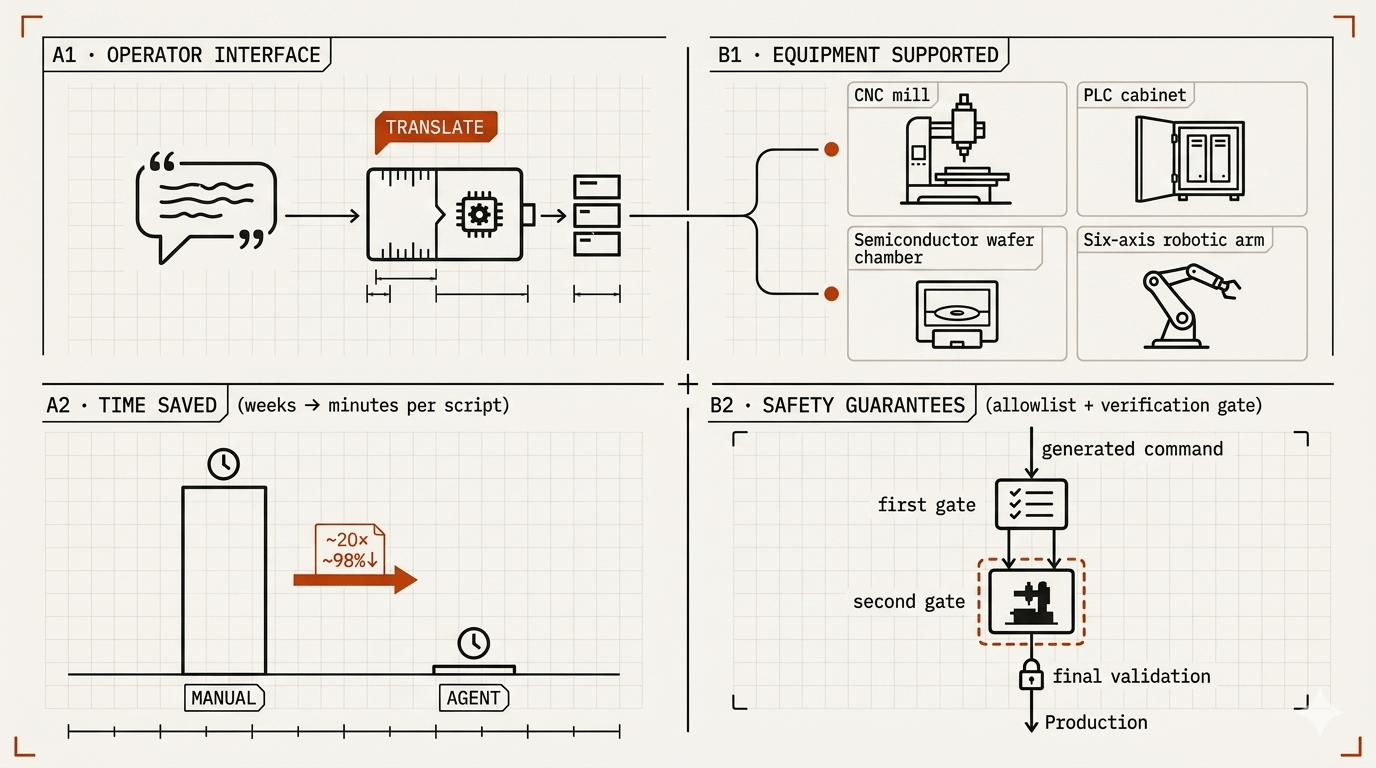
Agents that turn natural-language requests into validated automation scripts for CNC, PLC, semiconductor, and robotics equipment. RAG over your documentation, allowlisted safety, self-correcting debug loop.

CNCPLCSECS/GEMRobotics
02 · Knowledge —

Capture what your senior engineers know

On-premise systems that capture the undocumented know-how living in your senior engineers' heads — equipment quirks, calibration steps, troubleshooting paths — into a searchable, AI-ready knowledge base.

RAGVector DBWhisperLocal LLM
03 · Orchestration —

Measurement & test orchestration

End-to-end automation across instruments, simulators, and post-analysis tooling. Cross-domain workflows that turn months of manual validation into repeatable, scaled processes.

PythonSCPIOPC UAModbus
04 · Infrastructure —

Self-hosted or cloud AI & RAG

Stand up LLM systems with vector databases and retrieval pipelines — local when data can't leave your perimeter, cloud when latency or scale demand it, hybrid when both. Model selection, security guardrails, air-gapped builds where required.

Llama 3MistralMilvusQdrant
§02 · Engagement

A production-ready deployment, end to end.

Four weeks from a first conversation to a production-ready deployment in your environment. No long-term contracts. The deliverable belongs to you.

Week 01

Discovery

Audit your equipment stack, protocols, and existing scripts. Define safety boundaries and allowlists.

Week 02

Knowledge base

Ingest equipment documentation, datasheets, and historical scripts. Tune retrieval for accuracy.

Week 03

Agent build

Stand up the agent with your protocol adapters. Validate against simulators or sandboxed equipment.

Week 04

Deployment & handoff

Deploy on the floor with one team. Train operators, monitor results, document and hand over.

§03 · Coverage

Industries and teams.

Whether the equipment is a CNC mill, a PLC cabinet, a wafer prober, or a robotic cell, the deliverable is the same: validated, auditable code an operator can trust on day one.

Industries
Semiconductor & electronics CNC & precision manufacturing PLC / factory automation Industrial robotics Smart Factory
Location
Bay Area · CA · USA Remote, global On-site available

Start with one machine.
One team. One pilot.

The shortest path to seeing this work is a focused engagement on a single piece of equipment. See the worked example, or get in touch directly.